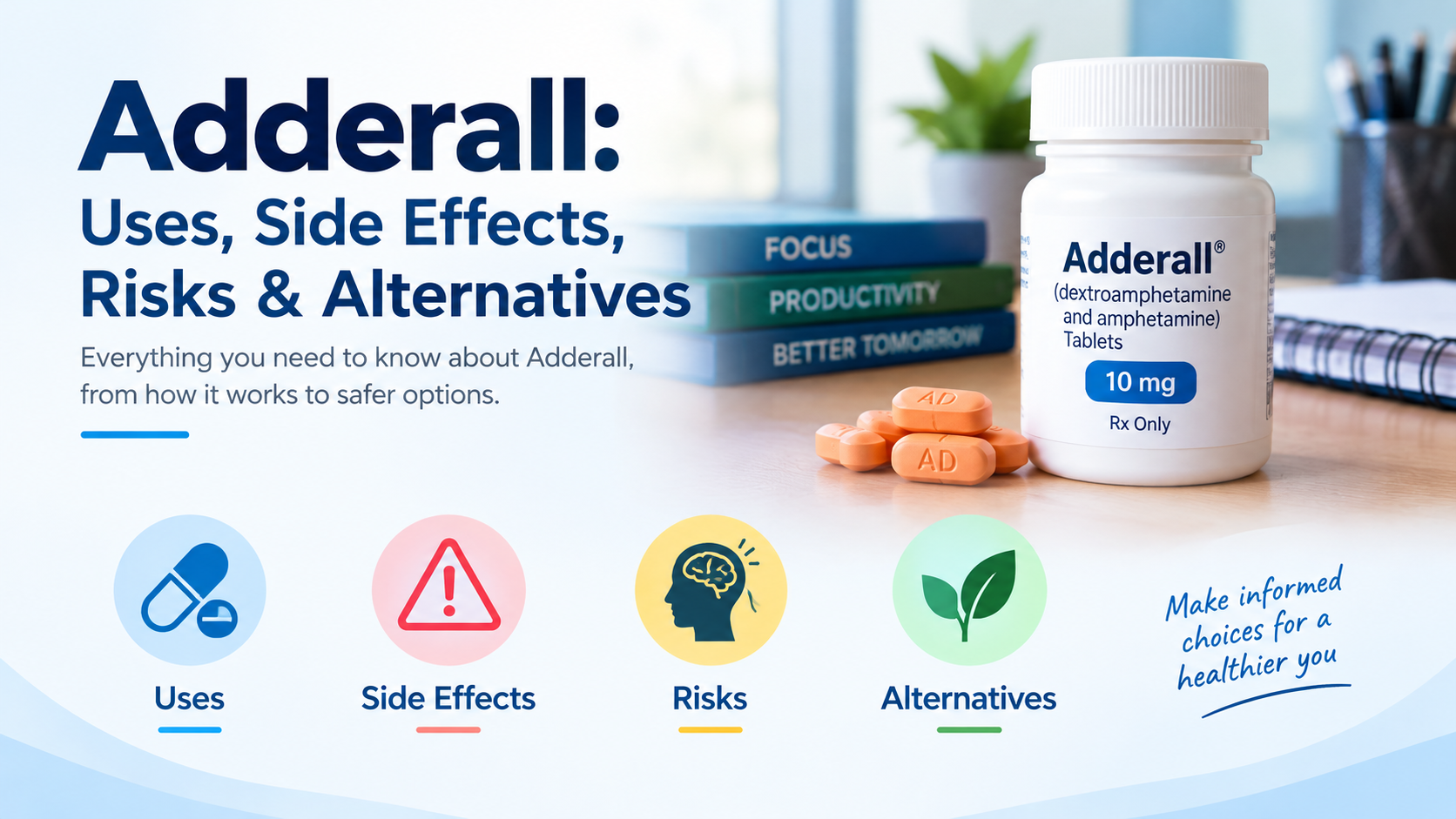
Introduction: Why Adderall Deserves a Closer Look
Adderall is one of the most recognized medications in the world. Millions of children, teens, and adults rely on it to manage attention-deficit/hyperactivity disorder (ADHD), and many describe it as life-changing. At the same time, headlines about shortages, misuse, and campus abuse have made Adderall one of the most misunderstood prescriptions around.
This guide separates fact from fear. You will learn how Adderall works, what it treats, which side effects to watch for, and why careful medical supervision matters. We will also cover the ongoing supply problems and the alternatives you can discuss with your doctor. Keep in mind that this article offers general education only, so it cannot replace personalized advice from your prescriber or pharmacist.
What Is Adderall? A Plain-English Overview
Adderall is the brand name for a prescription stimulant that combines two active ingredients: amphetamine and dextroamphetamine, often called mixed amphetamine salts. Doctors prescribe it mainly for ADHD and narcolepsy, a sleep disorder that causes overwhelming daytime sleepiness. Generic versions contain the same active ingredients, and many pharmacies stock them instead of the brand name.
In the United States, Adderall is a Schedule II controlled substance. That classification means the government recognizes its medical value but also its high potential for misuse and dependence. As a result, prescribers follow strict rules, and pharmacies monitor it closely. You also cannot receive automatic refills, so you will need regular contact with your healthcare team.
How Adderall Works in the Brain
Adderall increases the activity of two key brain chemicals: dopamine and norepinephrine. These neurotransmitters help regulate focus, motivation, impulse control, and alertness. In people with ADHD, the brain’s attention networks often work less efficiently. Adderall helps those networks fire more effectively, which allows the person to concentrate and organize their thoughts.
This effect can seem surprising, because a stimulant would logically make an ADHD brain more hyperactive. In practice, the opposite often happens. Many people with ADHD feel calmer and more in control once the medication improves their brain’s self-regulation. However, the same mechanism explains why Adderall can be misused. Someone without ADHD may feel an artificial burst of energy, and that burst brings real risks.
What Is Adderall Prescribed For?
Doctors prescribe Adderall for ADHD in children, teens, and adults. Common symptoms include trouble sustaining attention, forgetfulness, disorganization, restlessness, and impulsive decisions. Left untreated, these challenges can affect school performance, careers, relationships, and self-esteem. Therefore, effective treatment can make a meaningful difference in daily life.
In addition, doctors prescribe the immediate-release form for narcolepsy. The extended-release version, Adderall XR, is approved for ADHD. Some clinicians occasionally use stimulants for other conditions, although those uses fall outside official approval and require careful judgment. Importantly, a proper diagnosis should come first. A licensed professional should evaluate your symptoms, history, and other health conditions before recommending any ADHD medication.
Immediate-Release vs. Extended-Release Adderall
Adderall comes in two main forms. The immediate-release tablet acts fairly quickly and lasts for several hours, so some people take it more than once a day. The extended-release capsule releases the medication gradually, which provides longer coverage from a single morning dose. Many families prefer the extended-release option for its convenience and smoother effect.
Which form fits you best depends on your schedule, symptoms, and how your body responds. For example, a student might need coverage through a long school day, while another person may want a shorter window to protect sleep. Consequently, your doctor may adjust the form or timing over several visits. Never switch formulations or change your schedule without professional guidance.
How to Take Adderall Safely
Safe use begins with one simple rule: follow your prescriber’s directions exactly. Your doctor typically starts with a low amount and adjusts gradually based on your response and side effects. Therefore, you should never increase your amount, double up after a missed dose, or take it later in the day than directed. Late-day use is a common cause of insomnia.
Furthermore, store your medication in a locked place, away from children, teens, roommates, and visitors. Never share your pills, even with a friend who struggles with focus. Sharing a controlled substance is illegal and dangerous. In addition, count your pills regularly, keep your prescriber informed about any changes in your health, and attend every follow-up visit. These check-ins allow your doctor to monitor blood pressure, heart rate, appetite, sleep, and mood.
Common Adderall Side Effects
Like any medication, Adderall can cause side effects. The most common include decreased appetite, dry mouth, trouble sleeping, headaches, stomach discomfort, and a faster heartbeat. Some people also feel jittery, irritable, or anxious. Children may experience weight changes, and doctors monitor their growth carefully.
Many of these effects are mild and ease as your body adjusts. Nevertheless, you should never ignore symptoms that concern you. Contact your doctor if you notice persistent insomnia, significant weight loss, or mood changes. Seek emergency care immediately if you experience chest pain, fainting, shortness of breath, or signs of a severe allergic reaction. Also call your doctor right away if you develop new or worsening psychiatric symptoms, such as paranoia, hearing voices, or manic behavior. Stimulants can occasionally trigger these reactions.
The Serious Risks: Misuse, Addiction, and Heart Concerns
Although Adderall helps many people, it carries serious risks. In 2023, the FDA updated the boxed warning, its strongest label warning, for prescription stimulants. The update emphasizes the high potential for abuse, misuse, and addiction, which can lead to overdose and death. Misuse includes taking more than prescribed, using someone else’s pills, or using the drug to get high or to stay up for studying.
Heart risks also deserve attention. Stimulants can raise blood pressure and heart rate, and rare but serious cardiovascular events can occur, especially in people with underlying heart problems. For this reason, tell your doctor about any personal or family history of heart disease, sudden cardiac death, high blood pressure, or arrhythmia. Honest answers help your prescriber choose the safest plan. Moreover, if you suspect that you or a loved one is developing a problem with Adderall, reach out to a healthcare professional promptly. Treatment works, and seeking help is a sign of strength.
Dangerous Combinations: Alcohol, Other Drugs, and Counterfeit Pills
Mixing Adderall with other substances can cause harm. Alcohol is a particular concern, because Adderall can mask how intoxicated you feel. As a result, people may drink more than they realize, which raises the risk of alcohol poisoning and risky behavior. Combining Adderall with other stimulants, including large amounts of caffeine, decongestants, or illicit drugs, can strain your heart and nervous system.
Certain prescription medications also interact with Adderall. Notably, drugs called MAOIs, used for depression and other conditions, can cause dangerous reactions when combined with stimulants. Therefore, give your doctor and pharmacist a full list of everything you take, including supplements. Counterfeit pills present another serious danger. The DEA has warned that fake pills made to look like prescription stimulants may contain fentanyl, and these pills can be deadly. The DEA reports that many counterfeit pills contain fentanyl and are made to resemble prescription stimulants like Adderall. Always obtain your medication from a licensed pharmacy with a prescription written in your name. abc7ny
The Adderall Shortage: What Patients Need to Know
Adderall supply problems have affected patients for years. The FDA first announced the shortage in October 2022, citing intermittent manufacturing delays at Teva, one of the producers of the medication. Since then, the situation has improved in some ways but has not fully resolved. As of October 16, 2026, the FDA’s database still lists generic immediate-release Adderall tablets as being in active shortage, with 19 of 73 listed presentations unavailable and 9 limited. tremontpharmacyohtakeroon
Availability also varies widely by strength, manufacturer, and pharmacy. Extended-release mixed amphetamine salts capsules do not appear on the FDA’s current shortage list, though that says nothing about stock at any given pharmacy. So what can you do? First, ask your pharmacist which strengths are in stock before your prescription runs out. Second, ask your prescriber whether another formulation or medication could work. Third, never turn to unlicensed online sellers or street pills, because counterfeit products are a real danger. Finally, check the FDA Drug Shortages database for current information, since the status changes frequently. takeroon
Special Considerations: Children, Pregnancy, and Mental Health History
Certain groups need extra care with Adderall. Children and teens require regular monitoring of height, weight, sleep, and appetite. Parents should also watch for mood changes and supervise storage and administration. Meanwhile, adults with ADHD often benefit from reviewing their treatment regularly, since life demands and health conditions change over time.
If you are pregnant, planning a pregnancy, or breastfeeding, discuss the benefits and risks with your doctor before starting or stopping any ADHD medication. Likewise, tell your prescriber if you have a history of anxiety, depression, bipolar disorder, psychosis, tics, seizures, or substance use. These conditions do not always rule out treatment, but they influence which medication and monitoring plan makes the most sense. Open communication leads to safer, more personalized care.
Alternatives to Adderall for ADHD
Adderall is not the only effective option. Other stimulants, such as methylphenidate and lisdexamfetamine, work in similar but slightly different ways, and some people respond better to one than another. In addition, non-stimulant medications, including atomoxetine, viloxazine, guanfacine, and clonidine, offer choices for people who cannot tolerate stimulants or who have a higher risk of misuse. These options often take longer to work, but they carry a lower risk of dependence.
Non-drug strategies matter just as much. Cognitive behavioral therapy for ADHD teaches practical skills for planning, time management, and emotional regulation. ADHD coaching, organizational tools, regular exercise, consistent sleep, and structured routines can also reduce symptoms. Ultimately, many people do best with a combination approach, so ask your doctor which mix suits your needs.
Frequently Asked Questions (FAQs)
1. What is Adderall used for?
Doctors mainly prescribe Adderall to treat ADHD and narcolepsy. It boosts dopamine and norepinephrine activity, which improves focus, impulse control, and alertness.
2. Is Adderall addictive?
Adderall has a high potential for misuse and addiction, which is why it is a Schedule II controlled substance. The risk rises when people take more than prescribed or use it without a prescription. Taking it exactly as directed and keeping regular follow-ups lowers the risk.
3. Can you drink alcohol while taking Adderall?
Doctors generally advise against it. Adderall can hide the feeling of being drunk, which may lead to heavier drinking and greater risk. Ask your prescriber for guidance based on your situation.
4. Why is Adderall so hard to find?
Supply problems stem from manufacturing delays, active ingredient shortages, and high demand. Availability differs by strength and manufacturer, so ask your pharmacist what is in stock and talk to your prescriber about options.
5. Can I stop taking Adderall suddenly?
Many people can stop, but some experience fatigue, low mood, and irritability afterward. Talk to your doctor before stopping so you can plan the safest approach.
6. Are there alternatives to Adderall?
Yes. Options include other stimulants, non-stimulant medications, cognitive behavioral therapy, coaching, and lifestyle strategies. Your doctor can help you choose the best fit.
Conclusion: Make Informed Choices About Adderall
Adderall can transform daily life for people with ADHD and narcolepsy, offering better focus, calmer routines, and greater confidence. At the same time, it carries real risks, including misuse, heart concerns, and dangerous interactions. By learning how Adderall works, following your prescriber’s directions, and exploring every option, you can protect both your short-term performance and your long-term health.
Ready to take the next step? Schedule an appointment with your doctor or a licensed mental health professional to discuss your symptoms and treatment options. If you or someone you know is struggling with Adderall misuse, contact your healthcare provider or a local treatment service today. If you’re in the U.S. and need immediate emotional support, call or text 988 for the Suicide & Crisis Lifeline. Finally, share this article with anyone who could benefit from clear, trustworthy information.
Disclaimer: This article is for educational purposes only and does not constitute medical advice. Always consult a qualified healthcare provider about your health and medications.
Leave a Reply